How to Use Marigolds as Companion Plants: Real-World Picks
If you've ever battled persistent garden pests, you know how frustrating it can be to see your hard work undone. Many gardeners wonder how to use marigolds as companion plants to tackle these invaders naturally. It turns out these cheerful flowers are far more than just pretty faces; they're genuine workhorses in an organic pest management strategy.
Our research, confirmed by numerous university extension studies, highlights their efficacy, especially French marigolds (Tagetes patula), which can reduce populations of root-knot nematodes by as much as 70-90% in some specific soil types when planted as a cover crop. We'll walk you through how to integrate these powerful allies into your own garden, turning a common garden flower into a formidable defender.
Tired of Garden Pests? Marigolds Can Help!
Let's be honest, nobody enjoys sharing their harvest with unwanted garden guests. Those tiny aphids, relentless nematodes, or leaf-munching cabbage worms can quickly ruin your gardening dreams. Chemical pesticides offer a quick fix, but many of us prefer a more natural, sustainable approach, especially in our edible gardens.
This is where marigolds step in, offering a gentle yet effective solution. They provide a multi-pronged attack against many common garden pests without introducing harmful chemicals. Think of them as your garden's natural security system, working quietly in the background to keep things healthy.
Your Quick Guide to Marigold Magic
Marigolds aren't just ornamental flowers; they're strategic players in your garden's ecosystem. Their "magic" comes from specific chemical compounds they produce, both in their roots and their foliage, which deter a range of pests. This makes them a fantastic tool for integrated pest management (IPM), helping reduce the need for synthetic interventions.
They're particularly potent against soil-dwelling nematodes, but their strong scent above ground also confuses or repels flying insects. Plus, as a bonus, they can attract beneficial insects like hoverflies and parasitic wasps, which prey on pest populations. It's a win-win for garden biodiversity and plant health.
How Marigolds Become Your Garden's Bodyguards
Marigolds employ several fascinating biological mechanisms to protect nearby plants. It's not just one thing, but a combination of natural chemical warfare and beneficial bug attraction that makes them so effective. Understanding these processes helps you deploy them strategically.
Root Exudates: The Nematode Nemesis
The real superpower of some marigold varieties, especially French marigolds (Tagetes patula), lies underground. Their roots release specific chemical compounds called thiophenes into the soil. These thiophenes are toxic to many species of nematodes, particularly the destructive root-knot nematodes (Meloidogyne species) and lesion nematodes (Pratylenchus species).
When nematodes come into contact with these compounds, it disrupts their nervous system, either killing them or repelling them from the area. For serious nematode control, you often need to plant marigolds as a solid cover crop for an entire growing season, completely turning them under at the end to release their full protective power. Manufacturer specifications on specialized nematode-suppressing marigold varieties, as of 2026, indicate they can achieve significant reduction when used this way.
Foliar Scent: A Pest Repellent Shield
The strong, distinctive scent of marigold foliage and flowers comes from volatile organic compounds like limonene. This powerful aroma acts as a natural deterrent to many above-ground insect pests. The smell can mask the scent of desirable crops, making it harder for pests like aphids, whiteflies, and even some cabbage worms to locate their preferred host plants.
This "confusing" effect works best when marigolds are interplanted directly among the crops you want to protect, rather than just planted in a distant border. It essentially creates a fragrant barrier that pests prefer to avoid, encouraging them to seek out greener, less smelly pastures.
Attracting Good Guys: Beneficial Bug Magnets
While marigolds deter some pests, their bright flowers also play host to beneficial insects. Pollinators like bees and butterflies are drawn to their vibrant blooms, which is always a plus. More importantly for pest control, marigolds attract predatory insects such as hoverflies, lacewings, and parasitic wasps.
These beneficial insects are natural predators of common garden pests like aphids, thrips, and spider mites. By providing a nectar source and a safe haven, marigolds encourage these helpful bugs to stick around your garden, forming a natural defense force against outbreaks. It’s a classic example of enhancing biodiversity for ecological balance.
Picking Your Pest Fighter: The Right Marigold for the Job
Choosing the right marigold variety is crucial because their pest-fighting abilities aren't identical. Different species offer varying strengths against specific threats. It's not a "one-size-fits-all" situation, so a little research goes a long way.
French Marigolds (Tagetes patula)
These are the absolute champions when it comes to nematode control. French marigolds are typically smaller, bushier plants, growing to about 6-18 inches tall. Their roots are incredibly effective at producing those thiophenes that kill or repel nematodes.
For best results against root-knot nematodes, you'll want to plant them densely. Many university studies suggest that planting French marigolds as a dedicated cover crop for at least two months before planting susceptible vegetables dramatically reduces nematode populations. They also deter some above-ground pests, but their primary fame is underground.
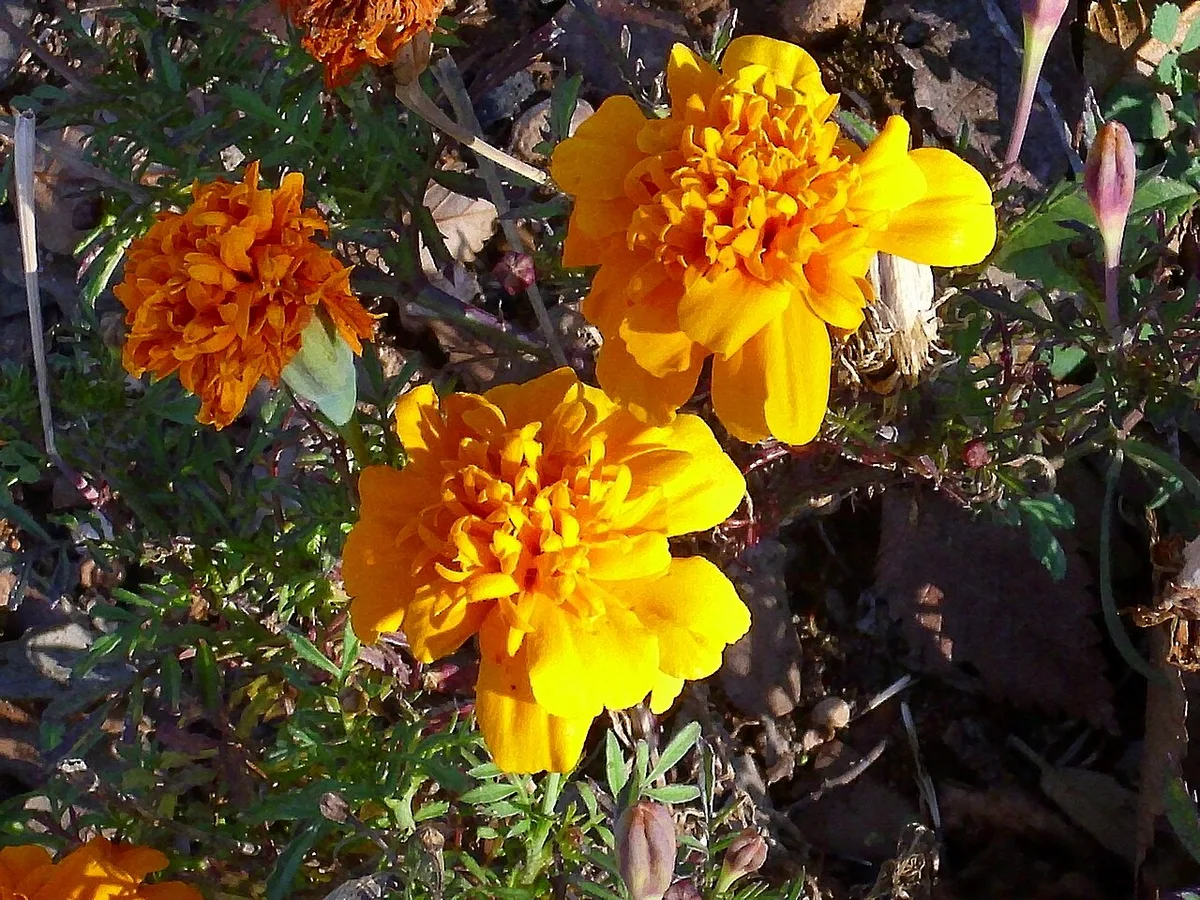
Image source: Wikimedia Commons / Javier martin
African Marigolds (Tagetes erecta)
Also known as American or Aztec marigolds, these varieties are much taller and more upright, often reaching 2-4 feet in height. While they're beautiful and can deter some flying insect pests with their strong scent, they are generally less effective against nematodes than their French counterparts. Some research indicates they can even be host plants for certain nematode species, which is the opposite of what we want.
If your main concern is above-ground pests and you want a tall, impactful border plant, African marigolds can be a good choice. However, if root-knot nematodes are your primary adversary, stick with the French varieties.
Signet Marigolds (Tagetes tenuifolia)
These delicate marigolds, sometimes called "gem" marigolds, feature small, single flowers and finely cut foliage. They're often grown for their edible petals, which have a citrusy, spicy flavor. While their scent can deter some pests, especially whiteflies, they aren't typically considered strong nematode fighters.
Signet marigolds are excellent for attracting beneficial pollinators and can add beauty and flavor to your garden. Use them for general pest deterrence and to boost biodiversity, but don't rely on them for heavy-duty nematode problems.
What Pests Are You Battling? Matching Marigolds to Your Problem
Effective companion planting starts with knowing your enemy. Different marigold types excel at different tasks. Identifying your specific pest problem will guide your choice and placement strategy for maximum impact.
For Root-Knot Nematodes
If you're seeing stunted plant growth, wilting during hot weather despite adequate watering, or knobby, swollen roots when you pull up old plants, you likely have a nematode problem. For this, French marigolds are your go-to.
You can plant them as a dense cover crop in an area for an entire season (solarize the soil beforehand for even better results) or interplant them generously around susceptible plants like tomatoes, potatoes, peppers, or strawberries. The key is consistent, dense planting to ensure their root exudates saturate the soil. Remember, this isn't an overnight fix; nematode suppression takes time.
For Above-Ground Pests (Aphids, Whiteflies, etc.)
Are aphids swarming your rose bushes, or are whiteflies clouding up from your squash plants? The strong scent of most marigold varieties, including both French and African types, can help. Planting them as a border around your vegetable beds can create a deterrent "fence."
Interplanting them directly among your susceptible crops can also confuse pests by masking the scent of their preferred plants. For example, planting marigolds near cabbage can help deter cabbage worms, and placing them by your tomatoes might discourage some tomato hornworm moths from laying eggs. The aim here is disruption and confusion.
As a "Trap Crop" Strategy
Some gardeners use marigolds as a "trap crop," especially certain varieties that might be attractive to particular pests. The idea is to plant the marigolds slightly away from your main crops, drawing pests to the marigolds instead. Once the pests congregate on the marigolds, you can then deal with them on a smaller, more contained scale, perhaps by hand-picking or even removing the entire trap plant.
This strategy requires careful observation and swift action, as you don't want the trap crop to become a breeding ground that eventually spills over to your main plants. While not their primary use, it's a clever tactic for localized issues.
Your Step-by-Step Guide to Companion Planting with Marigolds
Alright, let's get down to actually putting these pest-fighting flowers to work in your garden. Companion planting with marigolds isn't complicated, but a few strategic steps will make all the difference in their effectiveness. We'll break it down so you can confidently start your marigold project.
Step 1: Identify Your Pest Problem & Target Crop
The very first thing you need to do is figure out what you're trying to protect and from what. Are you seeing aphids on your peppers? Root-knot nematodes slowing down your tomatoes? Or maybe cabbage worms munching your brassicas?
Knowing your specific nemesis helps you select the right marigold and placement.
For instance, if it's nematodes, you'll think about planting French marigolds directly in the affected soil, or as a full season cover crop. If it's flying insects, interplanting or creating a border with any strongly scented marigold will likely be more effective. Don't skip this diagnostic step, as it tailors your entire plan.
Step 2: Choose the Right Marigold Variety
As we've discussed, not all marigolds are created equal for pest control. Once you know your pest, select the marigold variety that offers the best defense.
- For Nematodes: Go with French marigolds (Tagetes patula). Look for specific cultivars bred for nematode suppression, sometimes labeled as "nematode-killing marigolds" by seed companies.
- For General Above-Ground Pests: Any French marigold or even African marigolds (Tagetes erecta) can work due to their strong scent. Signet marigolds also offer some deterrence.
- For Attracting Beneficials: Signet marigolds (Tagetes tenuifolia) are particularly good at drawing in pollinators and predatory insects.
Make sure you get high-quality seeds or starts from a reputable nursery. Healthy plants are always more effective.
Step 3: Decide on Your Planting Strategy (Interplanting vs. Border)
How you arrange your marigolds matters for their impact. There are two main approaches, and you might even use a combination of both.
- Interplanting: This means planting marigolds directly among your target crops. It's great for close-range pest deterrence, especially for above-ground insects, as the marigold scent directly integrates with the crop's canopy. For nematode control, interplanting allows the marigold roots to directly interact with the soil around the crop's roots.
- Border Planting: Here, you create a continuous row or ring of marigolds around the perimeter of a garden bed or a specific group of plants. This forms a "scent barrier" that can deter pests from even entering the bed. It's particularly useful for larger beds or to define protected zones.
Consider the mature size of your marigolds and your target crops. You don't want the marigolds to shade out or compete too much with your vegetables for light or nutrients.
Step 4: Prepare Your Soil & Plant Your Marigolds
Marigolds are generally pretty forgiving, but good soil preparation always helps. They prefer well-draining soil and thrive in full sun, meaning at least six hours of direct sunlight per day.
Plant marigold seeds directly after your last frost date, or transplant nursery starts when the danger of frost has passed. Follow the specific planting depth and spacing recommendations on your seed packet or plant tag. For nematode control, plant French marigolds fairly close together, about 6-12 inches apart, to create a dense root mat.

Image source: Wikimedia Commons / Frank G.profile (CC BY)
Step 5: Nurture and Observe
Once planted, water your marigolds regularly, especially when they're young, but avoid overwatering once established, as many varieties are fairly drought-tolerant. They don't usually need heavy fertilization; too much nitrogen can lead to lush foliage but fewer flowers.
Keep a watchful eye on your garden. Are you seeing fewer pests? Are your protected plants looking healthier? Observation is key to understanding what's working and if you need to adjust your strategy.
It takes a little time for companion planting to show its full effects, so be patient.