How Companion Planting to Improve Soil Health 2026
Ever looked at your garden, seen struggling plants, and wondered if there was a better way than constantly adding synthetic fertilizers? You're not alone. Many gardeners grapple with poor soil health, and that's where companion planting to improve soil health truly shines. It’s a smart, natural way to transform your garden from the ground up, making plants more resilient and productive.
This isn't just about pretty pairings; it's about creating a living, breathing ecosystem underground. In our research, studies from university agricultural extensions consistently show that well-managed companion planting can increase soil organic matter by 1-2% annually in certain systems, significantly boosting overall fertility. Let's dive into how you can start making your soil work harder for you.
Why Your Soil Needs a Helping Hand: Understanding the Problem
If your plants aren't thriving, the culprit often lies beneath the surface, in the soil itself. We're talking about things like nutrient deficiencies, where your soil just doesn't have enough of the good stuff plants need to grow. Nitrogen, phosphorus, and potassium are often at the top of this list, but micronutrients matter too.
Then there's soil compaction, which makes it hard for roots to spread out and for water and air to penetrate. Ever tried to dig in really dense, hard soil? That's compaction at work. Poor drainage often goes hand-in-hand with this, leading to waterlogged roots and unhappy plants.
And let's not forget soil erosion, where precious topsoil literally washes or blows away, taking all its goodness with it. All these issues lead to low organic matter, diminished microbial activity, and ultimately, a less productive garden.
Companion Planting for Soil Health: The Quick Insight
Companion planting, at its heart, is about growing specific plants together for mutual benefit, and one of its most powerful applications is boosting soil health. Instead of just focusing on what plants do above ground, we're looking at what they do below the surface. This isn't just an old wives' tale, it's a practice supported by ecological principles.
Think of it as building a diverse, underground neighborhood where different plants contribute different skills. Some plants bring in essential nutrients, others break up tough soil, and many others feed the incredible network of beneficial microbes that are the true heroes of healthy soil. It’s a holistic approach that moves away from chemical interventions, fostering a resilient, self-sustaining garden ecosystem.
How Companion Planting Boosts Your Soil: The Core Explanation
Companion planting isn't magic, it's clever biology and ecology working together. When you choose the right plant partners, they perform vital functions that directly improve the quality and structure of your soil. This leads to a healthier environment for all your plants, from their roots to their fruits. It's all about creating a positive feedback loop.
The key lies in understanding the different roles plants can play in the soil food web. Some plants act as nutrient providers, others as soil conditioners, and many serve as critical hosts for beneficial microorganisms. It’s a dynamic system, constantly interacting and evolving.
The Power of Roots: Structure and Aeration
One of the most immediate impacts companion plants have is on soil structure. Plants with deep roots, like daikon radish or sweet clover, act like natural plows. They tunnel down into compacted soil, creating channels that improve aeration and drainage. This is incredibly helpful for breaking up hardpan, which is that dense, impermeable layer often found beneath the topsoil.
On the flip side, plants with dense, fibrous roots, such as many grasses or cereals used as cover crops, create a strong network that holds soil particles together. This root structure is crucial for preventing soil erosion, especially during heavy rains or high winds. They literally bind the soil, keeping it in place.
Feeding the Soil Food Web: Microbes and Nutrients
The rhizosphere, which is the narrow region of soil directly influenced by root secretions and associated soil microorganisms, is a bustling hub of activity. Plants release root exudates, which are sugars, amino acids, and other compounds that feed beneficial microbes in the soil. These microbes, in turn, help make nutrients available to plants.
Leguminous plants, like peas, beans, and clover, are famous for their symbiotic relationship with specific bacteria called rhizobia. These bacteria live in nodules on the plant roots and can take nitrogen from the air, converting it into a form plants can use, a process known as nitrogen fixation. This effectively enriches the soil with a natural, slow-release fertilizer. Other plants, known as dynamic accumulators, have deep taproots that bring up minerals and micronutrients from deeper soil layers, making them accessible to shallower-rooted plants when their leaves decompose.
This nutrient cycling is absolutely vital for long-term soil fertility.
Identifying Your Soil's Needs: A Decision Tree Approach
Before you start planting, you need to understand what your soil is telling you. This isn't a "one-size-fits-all" situation; what works for one garden might not be the best solution for another. It’s like a doctor diagnosing a patient, you need to assess the symptoms first. We'll use a decision tree approach to guide you through this process.
Step 1: Assess Your Current Soil Health
The first step is to become a soil detective. You need to gather clues about your soil's current condition. This information will be the foundation for all your companion planting decisions. Don't skip this part, as of 2026, understanding your soil is considered foundational for sustainable gardening.
Visual Cues and Hands-On Checks
Start by simply observing and touching your soil. What does it look like? Is it crumbly and rich, or hard and clumpy?
- Color: Darker soil often indicates higher organic matter.
- Texture: Squeeze a handful. Does it feel sandy, silty, or clayey? Does it form a ball easily, or does it fall apart?
- Smell: Healthy soil has an earthy, fresh smell. A sour or sulfurous smell can indicate anaerobic conditions (lack of oxygen).
- Compaction: Can you easily push a stick or your finger into the soil? If not, it's likely compacted.
- Water Drainage: After a rain, does water pool on the surface, or does it drain relatively quickly? Standing water points to poor drainage.
- Worm Activity: Dig around a bit. Do you see earthworms? They're fantastic indicators of healthy, aerated soil with good organic matter.
The Importance of Soil Testing
While visual cues are a good start, nothing beats a proper soil test. This is like getting a detailed medical report for your garden. A professional soil test will give you accurate readings on:
- pH levels: This tells you how acidic or alkaline your soil is, which directly impacts nutrient availability. Most vegetables prefer a slightly acidic to neutral pH (6.0-7.0).
- Nutrient levels: You'll get specifics on your N-P-K (nitrogen, phosphorus, potassium) and often micronutrient levels. This helps you identify exact deficiencies.
- Organic matter percentage: A high percentage means better soil structure, water retention, and microbial activity.
You can often get a soil test done through your local Cooperative Extension System or a private lab. The results will come with recommendations, making your plant selection much more informed.
Step 2: Pinpoint Your Soil's Specific Problems
Once you've assessed your soil, you can zero in on its biggest challenges. This is where our decision tree really starts to branch. Each problem has specific companion planting solutions.
Dealing with Nutrient Deficiencies
If your soil test shows low levels of key nutrients, particularly nitrogen, phosphorus, or potassium, companion plants can be incredibly effective.
- If you need nitrogen: You'll want to focus on nitrogen-fixing plants like clover, vetch, or specific legumes.
- If you need phosphorus or potassium (or micronutrients): Dynamic accumulators like comfrey or dandelions (yes, dandelions!) can pull these from deeper soil layers.
Tackling Soil Compaction and Poor Drainage
For dense, hard soil that water struggles to penetrate, your strategy will revolve around breaking up that compaction.
- If you have severe compaction: Deep-rooted plants like daikon radish, alfalfa, or sweet clover are your go-to. Their powerful taproots can penetrate and loosen tough soil.
- If drainage is the primary issue: Improving overall soil structure with a mix of deep-rooted and fibrous-rooted plants (which add organic matter) will help create better pore spaces for water movement.
Reducing Erosion and Boosting Organic Matter
If your soil is washing away or looks lifeless, your goal is to add structure and life.
- If erosion is a concern: Focus on cover crops with fibrous roots, like oats, rye, or buckwheat, that form a dense mat to protect the soil surface.
- If organic matter is low: Green manures, which are plants grown specifically to be tilled or chopped into the soil, are excellent. These include many legumes and grains, which contribute significant biomass when they decompose.
Choosing Your Soil's Companions: Plant Selection Guide
Okay, you know your soil's issues. Now for the fun part: picking the right plants to help! This is where the diverse world of companion plants really comes into play. We'll break down the main categories so you can select your soil's best allies.
Nitrogen Fixers: Nature's Fertilizer Factories
These are the superstars for gardens needing a nitrogen boost. Nitrogen is crucial for leafy growth, and these plants can literally pull it from the air.

Image source: Wikimedia Commons / Marion Phillips (CC BY-SA)
- Legumes: This is the big family. Think clovers (crimson clover, white clover), vetch (hairy vetch), alfalfa, peas, and beans. They form a symbiotic relationship with rhizobia bacteria, which convert atmospheric nitrogen into a usable form for plants. When these plants die and decompose, that fixed nitrogen becomes available to other plants in the soil.
- Benefits: Directly adds nitrogen, reduces the need for synthetic nitrogen fertilizers, improves soil structure with their roots.
- Use Cases: Intercrop them with heavy feeders like corn or tomatoes, use them as cover crops in fallow beds, or undersow them beneath taller plants.
Dynamic Accumulators: Mining for Micronutrients
These plants are like deep-sea divers for your soil. They have incredibly long taproots that can reach down into the subsoil, drawing up minerals and micronutrients that shallower-rooted plants can't access.
- Examples: Comfrey, dandelion, borage, and chicory are classic dynamic accumulators. They bring up calcium, magnesium, iron, and other trace elements.
- Benefits: Makes inaccessible nutrients available to the topsoil, adds diverse minerals to your compost pile if you "chop and drop" them, and often has beneficial insect-attracting flowers.
- Use Cases: Plant these near your main crops. When they mature, you can chop them down and leave the leaves on the soil surface as a mulch, letting the nutrients slowly release back into the topsoil.
Deep-Rooted Plants: Breaking Up Hardpan and Improving Structure
If you're battling compacted soil or poor drainage, these plants are your allies. Their roots are built for penetration.
- Examples: Daikon radish, tillage radish, sweet clover, and even some types of mustard. These aren't necessarily for eating; they're grown specifically for their roots' ability to break up dense layers.
- Benefits: Improves soil aeration, enhances water infiltration, creates channels for other plant roots to follow, and improves overall soil structure.
- Use Cases: Plant these in problem areas, especially after a growing season, and let them grow deeply before terminating them. Their decomposition leaves behind those valuable channels.
Biomass Producers: The Power of Green Manures and Cover Crops
These plants are all about adding bulk, organic matter, and life back to your soil. They're grown specifically to be incorporated into the soil, either by tilling or simply "chopping and dropping" them onto the surface to decompose.
- Examples: Many grasses (rye, oats, wheat), legumes (clover, vetch), buckwheat, and mustard. Often, mixtures of these are used.
- Benefits: Significantly increases soil organic matter, suppresses weeds, prevents erosion, provides habitat and food for beneficial soil organisms, and enhances water retention.
- Use Cases: Plant them in empty beds during off-seasons, or between rows of main crops as a living mulch. The goal is to grow a lot of green material and then return it to the soil.
Your Companion Planting Action Plan: A Step-by-Step Workflow
Now that you've got your soil analysis and plant choices in mind, it's time to put that plan into action. This isn't a "set it and forget it" deal, but rather a flexible workflow that adapts to your garden's needs. We'll walk through how to integrate these plants and manage them effectively.
Integrating Plants into Your Garden Design
This step is about strategically placing your chosen companion plants. You're not just throwing seeds around; you're intentionally creating beneficial relationships.
- Intercropping: This means planting different crops in the same space at the same time. For instance, planting nitrogen-fixing clover between rows of corn helps feed the corn.
- Undersowing: Similar to intercropping, but often involves planting a cover crop underneath an existing main crop. Imagine clover beneath your tomatoes.
- Living Mulches: Using low-growing companion plants to cover the soil surface, like white clover around fruit trees, helps suppress weeds and conserve moisture.
- Rotation: While not strictly companion planting, incorporating green manures and cover crops into your crop rotation plan is crucial for long-term soil health. For example, after a heavy feeding crop like brassicas, you might plant a nitrogen-fixing cover crop.
Planting and Establishment Best Practices
Getting your companion plants off to a good start is key.
- Seed Preparation: For legumes, consider seed inoculation with specific rhizobia bacteria if your soil hasn't grown them recently. This ensures those nitrogen-fixing nodules form efficiently.
- Timing is Everything: Plant cover crops at the right time for your climate zone and the specific plant. Winter rye, for example, is best sown in late summer or early fall to establish before cold weather.
- Watering: Just like any plant, companions need adequate water to establish healthy root systems and start doing their job.
- Spacing: Ensure adequate space so that your companion plants don't outcompete your main crops for light or water, unless that's your specific goal (e.g., total weed suppression).
Management and Termination: When to Let Them Go
Many companion plants, especially cover crops and green manures, aren't meant to grow indefinitely. Knowing when and how to "terminate" them is crucial for releasing their stored benefits into the soil for your next crop.
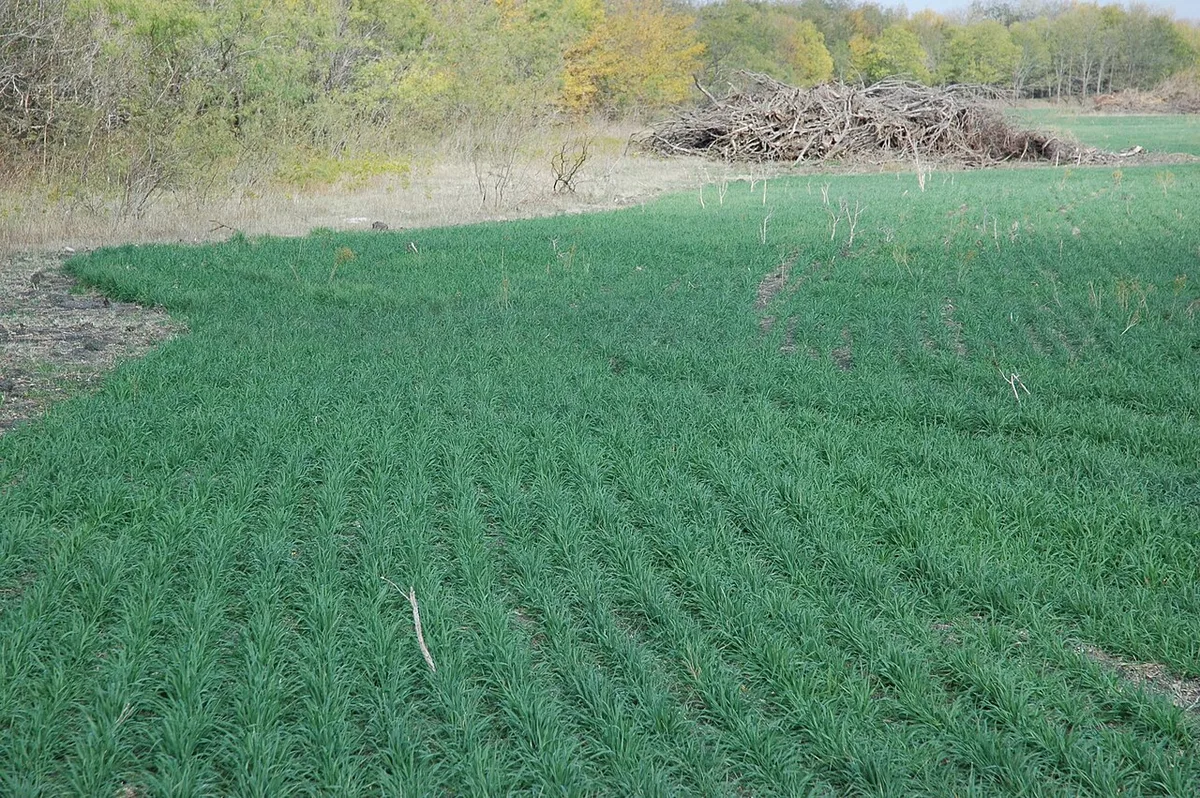
Image source: Wikimedia Commons / U.S. Department of Agriculture (CC BY)
- Chop and Drop: This is a simple, no-till method. When your green manure or dynamic accumulator is mature (often before it sets seed), you simply cut it down at the base and leave the plant material right on the soil surface. This organic matter decomposes, slowly releasing nutrients and feeding the soil food web.
- Crimping: For larger areas or certain cover crops, a roller crimper can flatten the plants, effectively terminating them without tilling. This leaves a thick mulch layer.
- Mowing/Scything: Cutting down cover crops with a mower or scythe is another effective way to manage their growth and prepare the bed for subsequent planting.
- Timing for Termination: The general rule for green manures is to terminate them a few weeks before planting your next crop. This gives the plant material time to break down slightly and for the soil microbes to get to work. If you terminate too early, you might lose some of the benefits; too late, and you might have too much undecomposed material interfering with your new plantings.
Beyond Individual Plants: Combining Strategies for Maximum Impact
While individual companion plants offer specific benefits, the real magic happens when you combine strategies. Think of your garden as an orchestra, not a solo act. A symphony of different plants, each playing its part, creates a far richer and more resilient soil ecosystem than any single plant could on its own. It's about building synergy.
For instance, you might pair nitrogen-fixing legumes with deep-rooted dynamic accumulators. The legumes provide nitrogen for the surface, while the accumulators bring up minerals from below, enriching the whole soil column. This polyculture approach supports a more diverse soil food web, making your soil more robust and less susceptible to problems.
Here are a few ways to layer these benefits:
- Nitrogen Fixer + Deep Root: Plant alfalfa (deep roots, nitrogen fixer) in an area needing both structural improvement and nitrogen.
- Green Manure + Dynamic Accumulator: Follow a harvested crop with a mix of hairy vetch (green manure, nitrogen fixer) and daikon radish (deep root, biomass producer). When chopped, they contribute both nitrogen and organic matter that breaks up compaction.
- Living Mulch + Main Crop: Undersow white clover beneath your brassicas. The clover suppresses weeds, fixes nitrogen, and keeps the soil cool and moist, all while the brassicas grow above.
Common Mistakes to Avoid When Companion Planting for Soil
Even with the best intentions, it's easy to stumble when you're starting out with companion planting. Knowing these common pitfalls can save you a lot of frustration and ensure your efforts truly benefit your soil. Remember, observation and adaptation are key.
- Ignoring Soil Testing: Trying to fix a problem you haven't accurately identified is a recipe for wasted effort. Don't guess your soil's pH or nutrient levels; get a test done. Without it, you might be planting nitrogen fixers in soil that's already rich in nitrogen, missing the actual deficiency.
- Overlooking Plant Growth Habits: Some "companions" can become competitors if not managed well. Vigorous cover crops can smother young seedlings of your main crops if left unchecked. Always consider how much space and light each plant needs, both above and below ground.
- Improper Termination: Just letting cover crops grow indefinitely, or tilling them in too late or too early, can negate their benefits. If you let them go to seed, you might create a new weed problem. If you terminate them right before planting, the decomposition process can temporarily tie up nitrogen, making it unavailable to your new plants. Aim for a few weeks of decomposition time.
- Expecting Instant Results: Building soil health takes time. You won't see a radically different soil structure or nutrient profile overnight. Consistent application of companion planting strategies over several seasons is what yields significant, lasting improvements. Think long-term.
- Introducing Invasive Species: Always double-check if a recommended companion plant is considered invasive in your local region. While beneficial in one context, an aggressive plant can become a severe problem, outcompeting native flora and disrupting ecosystems. Consult local agricultural guidelines or university extension resources.
Expert Tips for Nurturing Your Soil's Ecosystem
Taking your companion planting efforts to the next level means thinking like a seasoned gardener who truly understands the soil. It's about more than just plants; it's about fostering a dynamic, living system. Here are some pointers we've gathered from research and experienced growers.
- Embrace Mycorrhizal Fungi: These beneficial fungi form symbiotic relationships with plant roots, extending their reach and improving nutrient and water uptake. Many cover crop seeds are available inoculated with mycorrhizae, or you can add inoculants to your soil. They are vital for nutrient cycling.
- Minimize Soil Disturbance (No-Till/Reduced-Till): Once you've established a healthy soil structure with companion plants, try to disturb it as little as possible. Tilling breaks up the delicate networks of fungi and microbes, setting back your progress. Chopping and dropping or crimping cover crops rather than plowing them under preserves this structure.
- Keep the Soil Covered: Bare soil is vulnerable soil. Whether with living mulches, cover crops, or organic mulches (like wood chips or straw), keeping the soil covered protects it from erosion, moderates temperature, conserves moisture, and feeds soil organisms.
- Observe and Adapt: Your garden is unique. What works perfectly for a neighbor might need tweaking for your specific conditions. Pay attention to how your plants are responding, how the soil feels, and what problems persist. Adjust your plant choices and strategies accordingly each season. This iterative process is how you truly master soil health.
- Diversify, Diversify, Diversify: Just like a healthy diet includes many different foods, a healthy soil ecosystem thrives on a wide variety of plant inputs. Don't rely on just one or two types of companion plants. Mix legumes with grasses, deep taproots with fibrous roots, and annuals with perennials where appropriate.
Frequently Asked Questions About Soil Health and Companion Planting
We often get a few common questions when gardeners start thinking about using companion planting for soil health. Let's tackle some of these head-on.
Do I need to remove companion plants after they've done their job?
Yes, generally, for annual green manures and cover crops, you'll need to terminate them before they go to seed or before planting your main crop. The goal is to incorporate their biomass and nutrients into the soil. For living mulches or perennial dynamic accumulators, you might just chop them down periodically and let the material decompose in place.
Can I just use compost instead of companion planting?
Compost is absolutely fantastic for improving soil health, and it's a practice we highly recommend in conjunction with companion planting. Think of them as complementary strategies. Compost adds finished organic matter and a burst of microbial life. Companion plants, especially cover crops and green manures, grow organic matter directly in situ and actively engage with the soil food web, fixing nitrogen, breaking up compaction, and preventing erosion in ways compost alone can't.