How Native Ground Cover Plants to Replace Lawn 2026
Let's be honest: that thirsty, high-maintenance lawn is probably fighting your local environment. Native ground cover plants to replace lawn offer a smarter path. They work with your climate and soil, not against them, turning a chore into a resilient, living carpet that actually belongs there.
In our research across USDA zones, replacing turf with adapted species cuts water use by 60-80%. That's not just a number on a slide; it's a real drop in your bill and a win for your local watershed. The trick is matching the right plant to your specific patch of earth. Let's figure out yours.

Image source: Openverse / astrophotography_andy
Why Your Lawn is Probably the Wrong Plant for Your Yard
We’ve been sold a monoculture that expects perfect sun, endless water, and weekly haircuts. It’s a high-performance athlete in a world where your yard might be a shady, dry, or soggy mess. Native ground covers evolved right where you live. They’ve already solved the problems your grass is struggling with.
Think of it as the difference between wearing a bespoke suit and one you bought off the rack two sizes too small. A custom fit works. The wrong fit just causes constant, expensive problems. These plants aren't just "lawn alternatives"; they're plant communities built for your specific USDA hardiness zone, EPA ecoregion, and soil chemistry.
They establish deep roots, support local pollinators, and ask for very little in return.
The 4 Questions That Decide Your Perfect Ground Cover
There is no single "best" native ground cover. The right one for you depends entirely on four non-negotiable site conditions. Answer these honestly before you even look at a plant tag.
How to Diagnose Your Yard's Sun Profile
Forget the simple "full sun or shade" label on nursery pots. Sun is a moving target. Grab a notebook and track the sun on your site for one full day. Note the hours of direct sun, and crucially, which sun it is.
Morning sun is gentle and dew-laden; hot afternoon sun, especially on a south or west exposure, can bake the life out of a less-tolerant plant. A south-facing slope can be a drought furnace, while a north-facing bank might hold moisture and chill. A spot under a high-canopy tree gets different light than one under a dense evergreen. This daily map is your first filter.
Is Your Soil a Sponge or a Brick?
Your soil texture dictates everything. Grab a trowel and a mason jar. Dig down 6 inches, mix a few scoops from the area, add water, shake, and let settle. The layers that form tell the story.
Sandy soils drain fast and struggle to hold nutrients. Clay soils hold water, leading to crown rot in the wrong plant, and they heave dramatically in frost. Loam is the dream, but it's rare. You also need to know your pH.
Most natives have a range they'll tolerate, but extremes lock up nutrients. A simple $10 test from your county extension office gives you this hard data. Amending without knowing is like taking medicine for the wrong disease.
How Wet or Dry Is Your Spot?
Your zip code's rainfall average is meaningless for a specific microclimate. Observe what happens after a hard rain. Does water pool for hours, or vanish instantly? Is this a rain garden gully or a drought-prone strip under a downspout?
Is the area consistently moist, like near a downspout, or does it bake dry in summer?
Plants have hard moisture thresholds. A species that loves "mesic" (moderate) conditions will rot in a "hydric" (wet) zone. Conversely, a "xeric" (dry) plant will crispy-fry in a wet spot. Be brutally honest about your site's true moisture, not what you wish it was.
Will You Walk or Play On It?
Foot traffic tolerance is a make-or-break factor. A child's daily shortcut or a dog's patrol route needs a tough, rhizomatous spreader that can bounce back. A visual border bed can use something softer, slower, and more ornamental.
Consider the wear. Is it occasional light scuffing, or a paved-over path? Some plants, like certain sedges or creeping thymes, can handle light to moderate traffic once established. Others, like delicate mosses or wild ginger, are strictly for visual enjoyment and will be trampled into mud.
Don't plant a velvet painting in a hallway.
From Diagnosis to Recommendation: Your Decision Paths
Based on your answers, here’s where you’ll likely land. This isn't a shopping list; it's a filtering system.
For Dry, Sunny, Well-Drained Slopes or Beds
These are your erosion-control champions. Think Moss Phlox (Phlox subulata), Creeping Thyme (Thymus serpyllum), or Stonecrop (Sedum spurium). They thrive on neglect, love the heat, and knit the soil together with shallow, matting roots. They’re perfect for parking strips, south-facing slopes, and hot, dry corners where grass thins out.
For Moist to Wet, Sunny Areas
Here you can use moisture-lovers that turf grass can't compete with. Blue Star Flower (Amsonia tabernaemontana) has a grassy look and stunning fall color. Certain Sedges (Carex spp.) like Carex flacca form soft, hummocky mounds. These work where downspouts dump water or in low spots that stay consistently damp.
For Dry to Moist Shade Under Trees
This is the toughest challenge. You need plants that compete with tree roots and live on dappled light. Wild Ginger (Asarum canadense) spreads steadily in dry shade. Alum Root (Heuchera americana) offers colorful foliage and tolerates dry spells once established. Pachysandra is a non-native option, but check if it's invasive in your area. Avoid anything that needs constant moisture; tree roots will suck it dry.
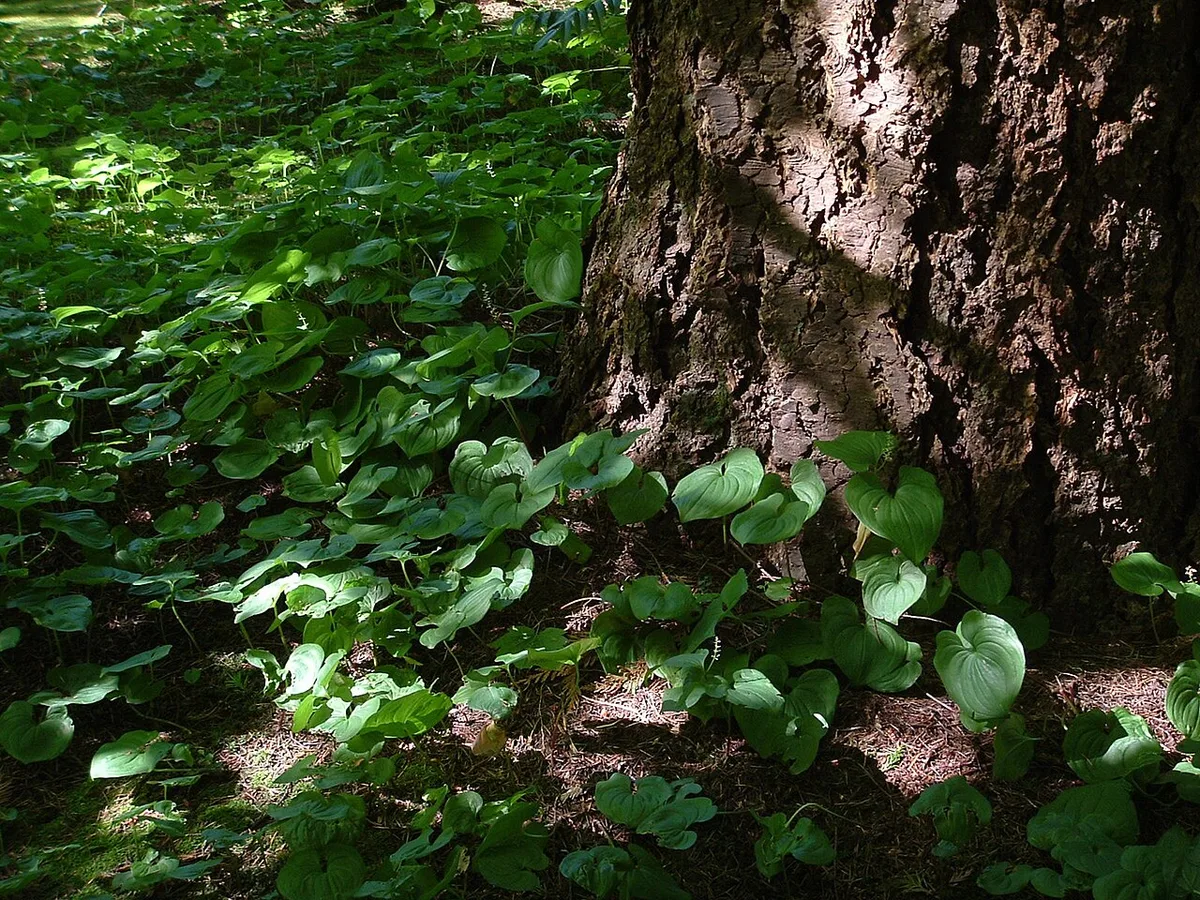
Image source: Wikimedia Commons / Paul Harrison (CC BY-SA)
For High-Traffic Paths and Play Zones
You need the "tough guys." Microclover (Trifolium repens var.) is a classic, nitrogen-fixing option that handles foot traffic better than grass and needs no mowing. Self-heal (Prunella vulgaris) is incredibly resilient and even has medicinal history. For a truly tough, woody option, Creeping Juniper (Juniperus horizontalis) can take a beating once established.
When You Have Deer Pressure
"Deer resistant" is a slippery term. It means "less preferred," not "immune." In areas with high browse pressure, focus on plants with strong scents or fuzzy leaves that deer dislike. Creeping Thyme, Lamb's Ear (Stachys byzantina), and Sedum varieties are good bets. Avoid highly palatable species like clover if deer are desperate. Your local native plant society has the real dirt on what deer ignore in your specific neighborhood.
Plugs vs. Seed: The Time vs. Money Trade-Off
This is your first major fork in the road. It determines your budget, your timeline, and how much weed warfare you're signing up for.
| Factor | Plugs (Starter Plants) | Seed |
|---|---|---|
| Initial Cost | Higher ($0.75 – $2.50 per plug) | Lower ($50 – $200 per pound) |
| Weed Competition | Much easier to manage | Very difficult; needs perfect prep |
| Timeline to Coverage | 12 – 18 months | 2 – 3 years minimum |
| Spacing & Labor | Digging 100s of holes | Requires meticulous seedbed prep |
| Best For | Most homeowners, visible areas, avoiding major weed battles | Large areas (>1000 sq ft), very patient gardeners, specific meadow mixes |
Plugs give you a head start. They’re small plants, already growing, that establish faster and shade out weeds. You'll pay more upfront, but you'll see results in your first year. Spacing is critical: 6-8 inches on center is typical.
Do the math; it adds up.
Seed is cheaper per square foot but comes with a huge caveat: weed pressure. You need a perfect seedbed, free of weed seeds, and you must stay on top of weeding for a full season. It's a job for large, less-visible areas where you can be patient. Some mixes require cold stratification for good germination.
If you go this route, consider a nurse crop of annual rye to shade the soil while your perennials germinate.
Planting & Establishment: The Make-or-Break Year
This is where most projects fail. People plant and then treat it like mature landscaping. It’s not. The first 12-18 months are critical nursery-phase care.
Patience and consistent effort now pay off for decades later.
The First 90 Days: Critical Care
Your new plugs are not established. They’re just rooted cuttings sitting in a harsh environment. They need consistent, deep watering to survive. Think of it as keeping a transplant bandage on until the roots explore.
Water deeply twice a week, providing about 1 inch of water total per week. A slow, deep soak is better than a daily sprinkle. The goal is to keep the root ball moist but not waterlogged. Check the soil an hour after watering; it should be damp several inches down.
This period is about survival, not growth.
The First Season: Weed Wars
Weeds are your number one enemy now. Your ground cover is small and slow. Weeds are fast and hungry. Mulch heavily with a weed-free arborist chip or crushed gravel to a depth of 2-3 inches.
This suppresses the bulk of them.
Even with mulch, you will get weeds. Hand-pull them relentlessly. Do not let them set seed. A single season of unchecked weed competition can set your project back a full year, as they outcompete your new plants for light, water, and nutrients.
This is not optional maintenance; it's essential warfare.
The First Winter: Letting Nature Do Its Job
Resist the urge to over-clean in autumn. Many native plants use their own seed heads for natural propagation and provide valuable winter structure and shelter for insects. Wait until you see strong new growth in early spring to trim back any dead foliage.
If you planted a deciduous species, the dieback is normal. Mark the spots so you don’t accidentally dig them up. In colder zones, a light layer of straw can protect crowns from heaving, but most established natives are tougher than they look. Let them prove it.
Common Mistakes That Waste Time and Money
Learn from the collective pain of thousands of failed projects. Avoid these.