Best Native Plants for Backyard Wildlife Habitat in 2026
Figuring out the best native plants for backyard wildlife habitat can feel like a big puzzle, but it doesn't have to be. The real secret is understanding that "best" isn't a universal list, but rather a deeply personal one, tailored specifically to your unique patch of earth. We're talking about creating a thriving ecosystem right outside your door, one that truly supports local birds, butterflies, and beneficial insects.
This isn't just about pretty flowers, it's about ecological function. A well-designed native garden, for example, can reduce residential water consumption by up to 50% compared to traditional turf grass, according to research by the National Wildlife Federation. Let's dig into how you can make truly informed choices to turn your backyard into a bustling haven.
Quick Answer: Your Backyard's Best Native Plants Start with Location
The "best" native plants for your backyard wildlife habitat are the ones that are native to your specific ecoregion and perfectly suited to your unique site conditions. This means there's no single, universal list. Instead, you need to think like a detective, investigating your local climate, soil type, and sun exposure before you ever pick a plant.
It's a decision-tree approach: if you live in the arid Southwest, the "best" plants will be completely different from those in the humid Southeast. Start local, then narrow down your choices based on what your yard naturally offers. This personalized approach ensures your plants will thrive and effectively support local wildlife, without needing excessive intervention from you.
Why Go Native? Beyond Just "Pretty" Plants
Choosing native plants does a whole lot more than just look nice; it builds a stronger, healthier local environment. These aren't just pretty faces, they're the foundational elements of a functional ecosystem. Native plants have evolved alongside local wildlife for thousands of years, creating intricate, mutually beneficial relationships.
When you plant native species, you're directly providing essential food sources like nectar, pollen, seeds, and berries that local birds, butterflies, and beneficial insects recognize and rely on. You're also offering critical shelter, nesting materials, and host plants for insect larvae, which are a vital food source for baby birds. Our research consistently shows that landscapes dominated by native plants host significantly more biodiversity than those filled with non-native ornamentals.
Finding Your Starting Point: Understanding Your Backyard's DNA
Before you even think about plant names, you've got to understand the "personality" of your backyard. This site assessment is the most crucial step in building a successful native habitat. It's like a doctor taking a patient's history, we need to know what's going on before we prescribe a solution.
What's Your Hardiness Zone?
Your plant hardiness zone is a big deal, telling you which plants can survive your region's coldest winter temperatures. The USDA Plant Hardiness Zone Map is the authoritative standard for this, dividing North America into zones based on average annual extreme minimum winter temperatures. Knowing your zone, like 6a or 7b, helps you avoid planting species that simply won't make it through the winter in your area. As of 2026, the map is regularly updated, so it's always worth a quick check for the latest information.
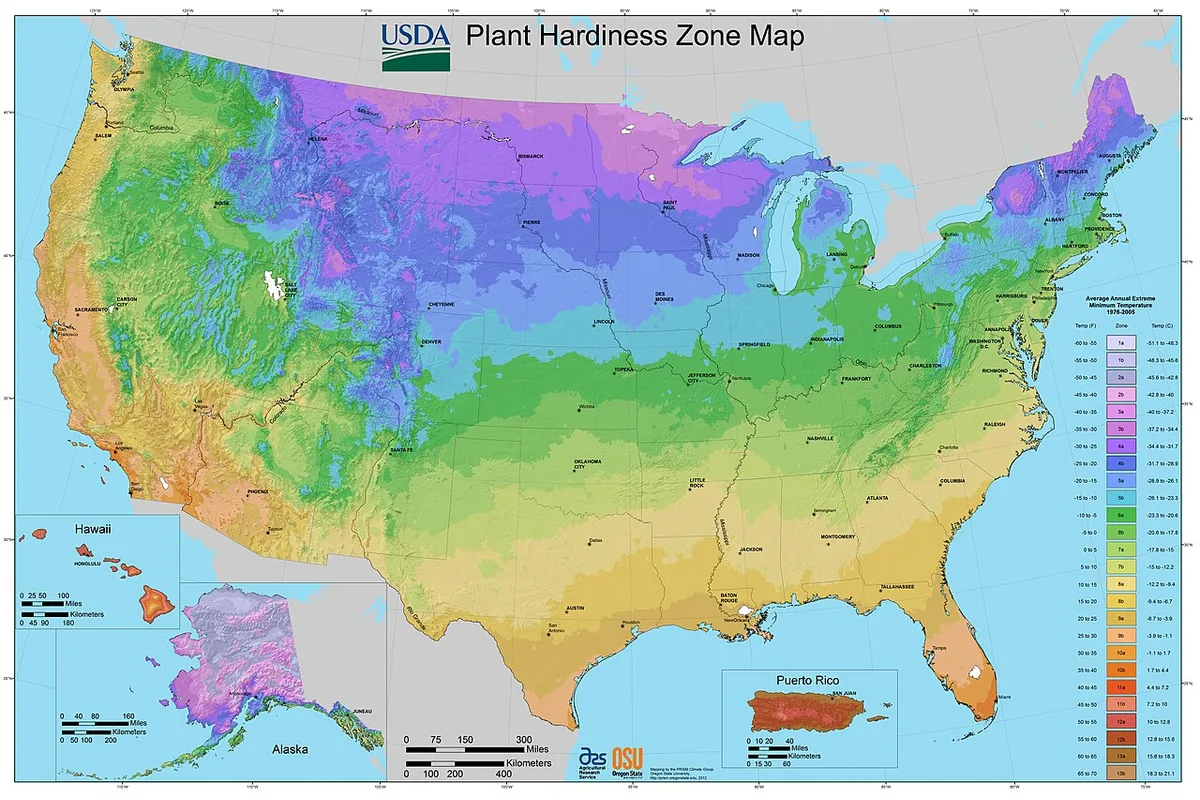
Image source: Wikimedia Commons / USDA-ARS and Oregon State University (OSU)
You can easily find your specific zone online by entering your zip code on the USDA's official website or through various university extension sites. This information is non-negotiable for successful long-term plant survival. If a plant isn't hardy in your zone, it won't be happy, and neither will you.
Decoding Your Soil Type
Soil isn't just dirt; it's a complex medium that dictates how well roots can anchor and how nutrients and water are held or drained. Knowing your soil type, whether it's sandy, clay, or loamy, helps you pick plants that naturally thrive in those conditions. Sandy soil drains quickly, often needing drought-tolerant plants, while clay soil retains water, which can be great for moisture-loving species but suffocating for others.
You can do a simple jar test to get a rough idea of your soil composition: take a sample, mix it with water in a jar, shake it up, and let it settle for 24 hours. The layers will reveal the proportions of sand, silt, and clay. For more precise details, university cooperative extension offices often offer affordable soil testing services. This test tells you not only the composition but also your soil's pH and nutrient levels, which are critical for plant health.
Sun or Shade? Mapping Your Light
Light exposure is another make-or-break factor for plant success. Most plants have specific requirements: full sun (at least six hours of direct sunlight daily), partial sun/shade (three to six hours of sun, often with afternoon shade), or full shade (less than three hours of direct sun). Ignoring these needs is a common mistake that leads to struggling plants.
Spend a day observing your backyard, noting where the sun hits at different times of the day. A simple sketch of your yard, marking sunny spots in the morning, afternoon, and evening, can be incredibly helpful. Remember, trees and structures can create significant shade patterns that shift throughout the day and even across seasons.
Designing for Wildlife: What Your Backyard Habitat Needs
Once you understand your site, it's time to think about what wildlife truly needs from a habitat. It's more than just a single plant; it's about creating a complete ecosystem that provides all the essentials. A well-designed habitat should offer food, water, and shelter in various forms throughout the year.
Think about it from a bird's or a bee's perspective: where do they get their breakfast, where do they hide from predators, and where do they raise their young? Your design should layer these elements, creating a dynamic and inviting space that caters to different species with different needs. We're aiming for a balanced approach that supports the entire life cycle of local wildlife.
Providing Food: Nectar, Pollen, Seeds, and Berries
Food is the cornerstone of any wildlife habitat. Native plants are unmatched in their ability to provide the specific types of nutrition that local wildlife recognizes and requires. This isn't just about general sustenance; it's about the right kind of fuel.
- Nectar and Pollen: Essential for pollinators like bees, butterflies, and hummingbirds. Look for a diversity of flowering plants with different bloom times to ensure a continuous food source from spring through fall. Think about the shapes of the flowers too; some are perfect for long-tongued bees, others for butterflies.
- Seeds: Many native grasses and wildflowers produce seeds that are vital for songbirds, especially during fall and winter. Letting spent flowers go to seed instead of deadheading them is a simple, effective strategy.
- Berries: Fruiting shrubs and trees provide high-energy food for birds and small mammals. Consider plants like serviceberry, elderberry, or dogwood, which offer seasonal fruit that animals readily consume.
- Host Plants: These are perhaps the most critical for insects. Host plants are specific species that butterfly and moth larvae (caterpillars) can eat. For instance, milkweed is essential for monarch caterpillars, and oak trees host hundreds of different caterpillar species, which are a primary food source for most nesting birds. Without host plants, you break a critical link in the food web.
Offering Shelter: Cover, Nesting, and Roosting Spots
Wildlife needs safe places to hide from predators, nest, and rest, and your native landscape can provide just that. It's not enough to just feed them; you need to give them a home. Different types of shelter serve different purposes.
- Dense Shrubs and Thickets: Provide excellent cover for birds to escape predators and a safe place to roost at night. A layered planting approach with shrubs of varying heights creates natural pockets of protection.
- Evergreens: Offer year-round shelter, which is especially important in winter. Consider native evergreen conifers or broadleaf evergreens that are suitable for your zone.
- Leaf Litter and Brush Piles: Don't be too tidy! Piles of leaves and branches offer homes for beneficial insects, amphibians, and small mammals, while also providing nesting materials for birds.
- Tall Grasses: Offer cover and nesting sites for ground-nesting birds and small rodents. Leaving some areas of native grasses unmowed over winter can be a huge boon for wildlife.
Supplying Water: Essential for All Creatures
Every living thing needs water, and a reliable water source can make your habitat exponentially more attractive to wildlife. A simple bird bath is a great start, but there are other ways to incorporate water.
- Bird Baths: Choose shallow baths with rough surfaces to give birds good footing. Keep them clean and replenish the water daily, especially in hot weather. Placing a few stones in the bath provides a shallow spot for smaller birds and insects.
- Shallow Dishes: Even a simple terra cotta saucer filled with pebbles and water can attract bees and butterflies, giving them a safe place to drink without falling in.
- Rain Gardens: If your site allows, a rain garden can collect rainwater runoff, creating a temporary wetland environment that attracts specific species while also helping with stormwater management. This method also works to slowly infiltrate water back into the ground, benefiting your plants.
Choosing Your Plants: A Decision Tree for Success
Now that you've assessed your site and understand wildlife's needs, it's time to put it all together. This is where your personal decision tree comes into play. Resist the urge to just pick plants you think look pretty; instead, follow these steps to make ecologically sound choices.
Step 1: Pinpoint Your Ecoregion & Local Climate
This goes beyond your hardiness zone. Ecoregions consider factors like precipitation, elevation, geology, and dominant vegetation types. For instance, the National Wildlife Federation and local native plant societies often provide lists of native plants specific to your ecoregion or state. Start by looking up your state's native plant society or your local university extension website; they'll have the most relevant lists.
If you're in, say, the Appalachian Mountains, your native plant list will be vastly different from someone in the coastal plains, even if you're in the same hardiness zone.
Step 2: Match Plants to Your Site's Sun, Soil, and Moisture
With your ecoregion's plant list in hand, filter it based on your backyard's specific conditions. This is where your site assessment pays off.
- Sunlight: If you have a full sun spot with sandy soil, look for plants tolerant of those conditions. Don't try to force a shade-loving woodland plant into a baking sunny spot, it just won't work.
- Soil Type: Filter for plants that prefer clay, loam, or sandy soils. Many native plant descriptions will explicitly state their preferred soil conditions.
- Moisture Requirements: Are you in a naturally dry spot, or does your yard stay moist? Select plants that are drought-tolerant, wet-tolerant, or prefer average moisture. This reduces your need for supplemental watering, a huge benefit of native planting.
Step 3: Select Keystone Species First
Keystone plant species are the ecological heavy-lifters. These plants support an exceptionally high number of butterfly and moth caterpillars, forming the base of the food web. Without them, local insect and bird populations suffer dramatically. Doug Tallamy's research highlights the importance of these species.
For example, native oaks (Quercus species) can host over 500 different caterpillar species, while native cherries (Prunus species) host over 400. Start by incorporating at least one or two keystone trees or shrubs that are native to your region and fit your site conditions. These provide immense ecological value for the space they occupy.
Step 4: Layer for Habitat Diversity (Canopy to Groundcover)
A truly effective wildlife habitat isn't flat; it has layers, just like a natural forest or meadow. Different layers provide different resources and attract diverse species. Think of it like an apartment building for wildlife.
- Canopy Layer: Tall native trees (e.g., oaks, maples, sycamores) provide shelter, nesting sites, and food (nuts, seeds).
- Understory Layer: Smaller native trees or large shrubs (e.g., serviceberry, dogwood, witch hazel) offer mid-level cover, berries, and nectar.
- Shrub Layer: Dense native shrubs (e.g., viburnums, native azaleas) provide excellent hiding spots, nesting opportunities, and often berries.
- Herbaceous Layer: Native perennial wildflowers and grasses (e.g., coneflowers, goldenrod, bluestem grasses) are critical for nectar, pollen, seeds, and host plants.
- Groundcover Layer: Low-growing native plants (e.g., wild ginger, foamflower, sedges) help suppress weeds, prevent erosion, and offer microhabitats for insects and amphibians.
Designing with these layers in mind creates a rich, complex environment that supports a much wider array of wildlife than a single-layered planting.
Step 5: Prioritize Host Plants for Butterflies and Moths
We mentioned host plants earlier, but they're so important they deserve their own step. Many butterfly and moth species have very specific host plant requirements for their larval stage. If you want beautiful butterflies flitting through your garden, you absolutely need to provide the plants their caterpillars eat.
A classic example is milkweed for monarch butterflies. Without milkweed, monarchs simply can't complete their life cycle. Research specific host plants for the butterfly and moth species native to your area and incorporate them into your design. It's often easier to attract the adults if you've provided for their young.
Top Native Plant Categories for Wildlife
Let's dive into some of the specific plant categories that form the backbone of a successful native wildlife habitat. Remember, the key is always to select species that are truly native to your ecoregion and match your site's conditions. This isn't an exhaustive list, but it gives you a solid framework for choosing.
Native Trees & Shrubs: The Backbone of Your Habitat
Native trees and shrubs are absolutely vital, providing structure, shelter, nesting sites, and significant food sources. They form the foundational layers of your habitat. For example, native oaks (Quercus spp.) are considered keystone species for a reason, supporting hundreds of caterpillar species, which are critical food for nesting birds.
Consider large native shrubs like elderberry (Sambucus canadensis), which offers berries for birds and flowers for pollinators, or native viburnums (Viburnum spp.) for their berries, nectar, and dense cover. Even smaller trees like serviceberry (Amelanchier spp.) provide early spring flowers for pollinators and delicious berries for birds. When choosing, think about the mature size of the plant to ensure it fits your space and doesn't outgrow its welcome.
Perennial Flowers: Nectar Stations and Visual Appeal
Native perennial flowers are the workhorses of any pollinator garden, providing consistent nectar and pollen for bees, butterflies, and other beneficial insects. They also add incredible beauty and seasonal interest to your backyard. Aim for a variety of bloom times to support pollinators throughout the growing season.
Think about vibrant coneflowers (Echinacea purpurea) and black-eyed Susans (Rudbeckia hirta), which are pollinator magnets and produce seeds for birds. Goldenrods (Solidago spp.) are often misunderstood but are crucial late-season nectar sources. Asters (Symphyotrichum spp.) also bloom late, extending food availability into the fall.
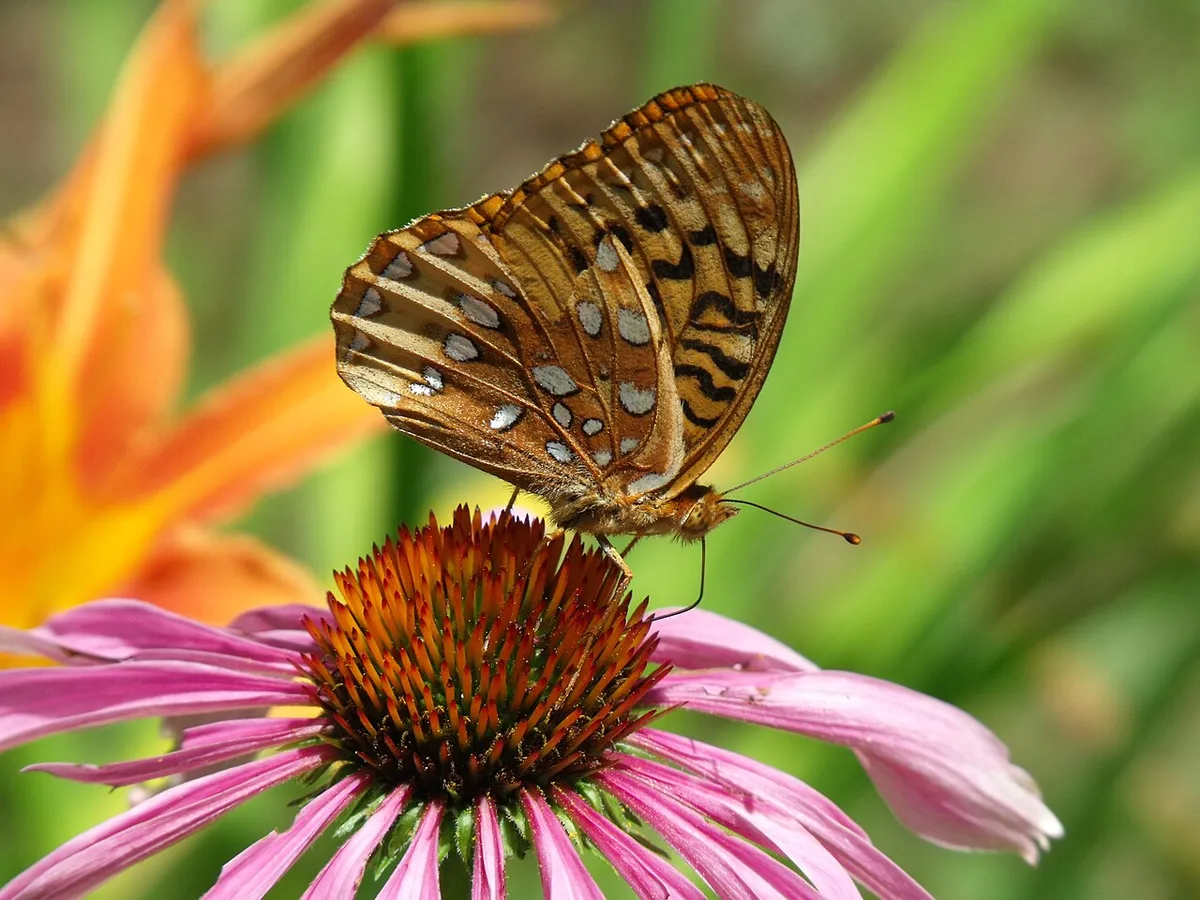
Image source: Wikimedia Commons / Figgins2165 (CC BY)
For shady spots, consider native columbine (Aquilegia canadensis) or foamflower (Tiarella cordifolia), both offering nectar and charm. Selecting a range of flower colors and shapes will attract a broader spectrum of pollinators, from short-tongued bees to long-tongued butterflies.
Native Grasses & Groundcovers: Erosion Control and Nesting Material
Don't overlook the power of native grasses and groundcovers. They play a vital role in soil health, erosion control, and providing crucial nesting and overwintering sites for insects and small birds. Many also offer valuable seeds for birds in the colder months.
Native bunch grasses like little bluestem (Schizachyrium scoparium) or switchgrass (Panicum virgatum) provide excellent cover and structure. They also serve as host plants for some butterfly and skipper species. For groundcovers, consider plants like wild ginger (Asarum canadense) or moss phlox (Phlox subulata), which suppress weeds and create a living mulch while offering their own benefits.
Native Vines: Vertical Habitat and Food Sources
Native vines often get forgotten, but they can add an important vertical dimension to your habitat, offering additional cover, nesting sites, and nectar sources. They are fantastic for covering fences, trellises, or climbing up existing structures. Just be sure to choose non-invasive options.
Trumpet honeysuckle (Lonicera sempervirens), a non-invasive native, provides bright, tubular flowers that hummingbirds adore. Virginia creeper (Parthenocissus quinquefolia) offers berries for birds and is a host plant for several moth species, plus it's quite vigorous, creating dense cover. Passionflower (Passiflora incarnata) is another beautiful option, acting as a host plant for Gulf fritillary butterflies. Always verify that a vine is truly native and not an aggressive, non-native species.
Getting Your Hands Dirty: Planting and Establishment
You've done your homework, you've got your list, now it's time for the fun part: getting those plants in the ground. While native plants are generally lower maintenance long-term, their initial establishment is critical. Proper planting techniques and initial care make all the difference between plants that thrive and those that just limp along.
Sourcing Native Plants: Where to Find the Right Stuff
Finding truly native plants, especially those grown without harmful pesticides, is key. It's not always as easy as popping into a big box store, which often carry non-native or cultivar varieties.