Guide to Regenerative Gardening Vs Organic Gardening Difference
Let's clear up the regenerative gardening vs organic gardening difference once and for all. Most gardeners I talk to are confused by these terms and often use them interchangeably. They’re not the same thing, and understanding the gap between them changes how you grow.
Here’s the real story: organic is about playing defence. It’s a set of rules that tell you what you can’t put on your plants. Regenerative is about playing offence. It’s a set of principles that tell you how to heal the land itself.
The USDA National Organic Program certification process can cost a small farm between $400 and $2,000 annually as of 2026. That’s a real standard with a real price tag. Regenerative? There’s no certificate on the wall.
You’re judged by what you can see happening in the soil.
Quick Answer: The Core Distinction
The simplest way to put it? Organic gardening focuses on avoiding harm by not using synthetic chemicals. Regenerative gardening focuses on actively healing the soil and building a complete, thriving ecosystem. They overlap, but their goals are fundamentally different.
Organic sets a baseline. No synthetic pesticides. No synthetic fertilizers. No GMOs.
It’s a negative list, things you don’t do. Your soil can be tired, compacted, and low on biology, but if you follow the rules, your tomatoes are still certified organic.
Regenerative sets a target. Increase soil organic matter by 0.5% every year. Double earthworm populations in three years. Capture and infiltrate 90% of rainfall on-site.
It’s a positive mission, goals you actively chase by working with nature, not just against certain chemicals.
What Organic Gardening Actually Is
A defensive approach. Organic is about setting clear boundaries, what you exclude from your garden. It’s a system built on certification standards and known inputs.
Key Practices:
- Using certified organic seeds, compost, and amendments
- Building soil fertility naturally through compost and manure
- Natural pest and disease control (e.g., neem, diatomaceous earth)
- Crop rotation to break pest cycles
- Acceptable tillage to prepare beds and control weeds
The goal is clean, uncontaminated food and soil. It’s about not adding bad stuff. Period.
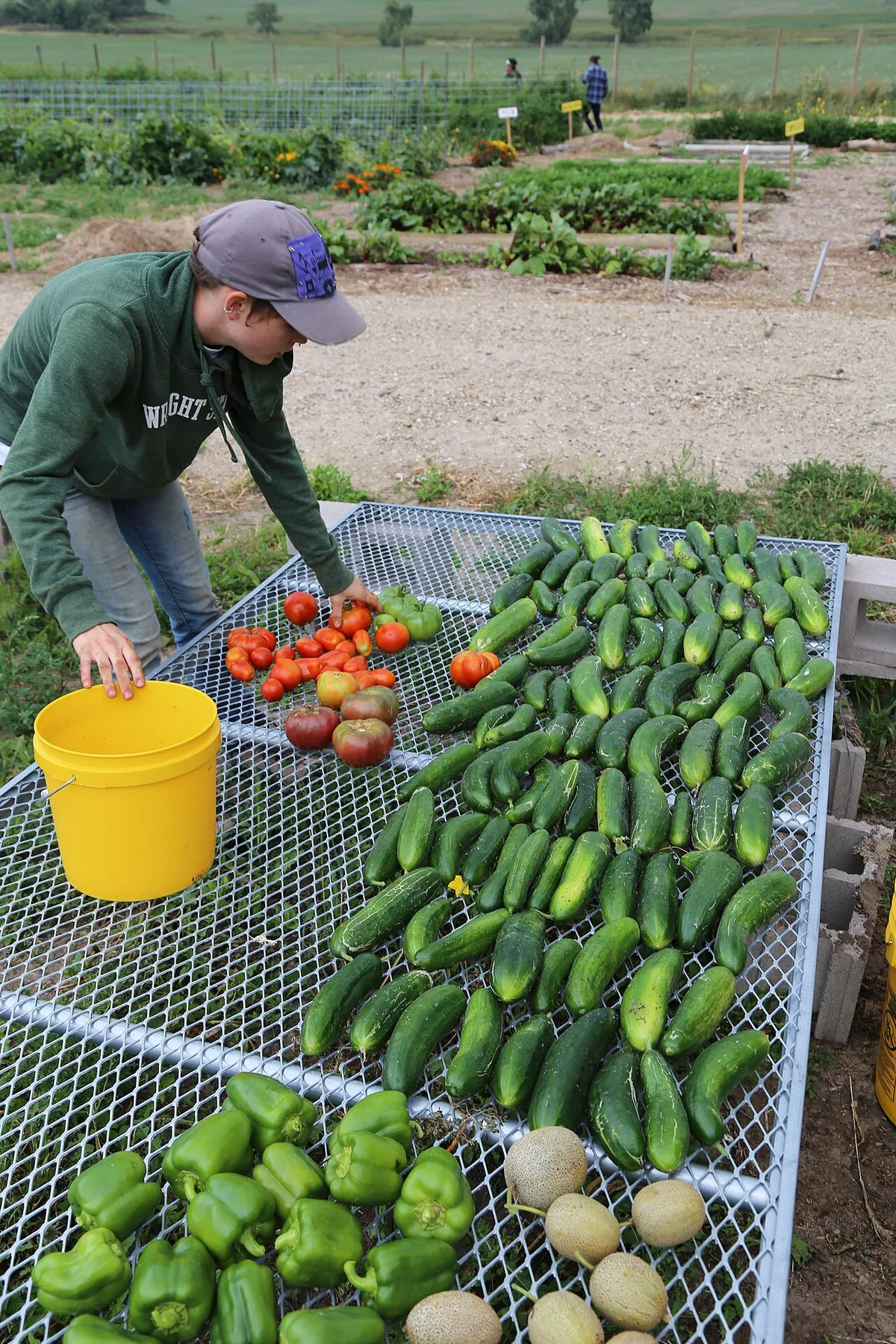
Image source: Wikimedia Commons / USDA NRCS South Dakota (CC BY-SA)
The strengths: You know exactly what you're getting. Organic certification has clear standards. Your produce is free from synthetic residues. It's a solid, proven approach.
The limitations: You can still have tired, depleted soil. You can still lose topsoil to erosion. You can still create bare dirt that bakes in the sun. Organic doesn't automatically mean thriving soil life, it just means you're not poisoning it with synthetics.
What Regenerative Gardening Actually Is
An offensive approach. Regeneration is about measurable gains, leaving the land better than you found it. It borrows from organic principles but adds a layer of ecological ambition.
Here's the thing: regeneration asks a question organic doesn't. It asks: "How do we leave this patch of earth better than we found it?"
Key Practices:
- No-till or minimal tillage, you never disturb the fungal networks underground
- Continuous soil cover, bare soil is the enemy. You use mulch, cover crops, or living plants year-round
- Biodiversity stacking, you're not just growing tomatoes. You're creating habitats for beneficial insects, fungi, birds, and microbes
- Compost teas and microbial inoculants, you're actively brewing and introducing life, not just adding nutrients
- Integration with surrounding ecology, you think about your garden as part of a larger watershed, not an isolated plot
- Perennial systems, you design food forests, swales, and systems that get stronger over time
The goal is measurable improvement: more organic matter in the soil, more water retention, more wildlife, more carbon sequestered.
The strengths: Your soil gets visibly darker and richer each year. Water bills drop because soil holds moisture better. Pest problems often solve themselves through biodiversity. You're part of a global movement to reverse climate change, one garden at a time.
The limitations: It's harder to measure "success" immediately. There's no certification body checking your work. You need to learn ecological principles, not just follow a rulebook. It can look "messy" to neighbors who prefer tidy lawns.
Side-by-Side: How They Compare on Key Factors
| Factor | Organic Gardening | Regenerative Gardening |
|---|---|---|
| Primary Goal | Produce without synthetic residues | Improve ecosystem health year-on-year |
| Soil Disturbance | Tilling is standard practice | Tilling is the enemy; no-till is core |
| Soil Coverage | Seasonal; bare soil common between crops | Permanent; bare soil is never exposed |
| Biodiversity | Focused on crop rotation | Stacked layers of plant, insect, and animal life |
| Success Metric | Certified produce, residue-free food | Increasing soil organic matter, water infiltration |
| Timeframe | Seasonal | Multi-year to decades |
| Certification | USDA Organic (formal, costly) | None (self-directed, outcome-based) |
| Visual Style | Neat rows, tidy appearance | "Messy," natural, habitat-rich |
This table cuts through the marketing fluff. You can see how one method is about compliance and the other is about creation.
When to Choose Organic (And When It's the Better Fit)
Go organic if you:
- Need certification for selling produce or personal assurance
- Grow in a small urban space (containers, small raised beds)
- Prefer a clear, rule-based system with approved inputs
- Main concern is avoiding synthetic chemical exposure
Organic's real-world limits:
- It doesn't automatically build soil structure or water retention
- Standard tilling practices can still cause compaction and erosion
- You might rely on bagged, certified organic fertilizers instead of brewing your own biology
If you want a guarantee on your food and a clear checklist, organic delivers. It's straightforward. You follow the rulebook and get the label. But don't assume that label means your soil is healthy.
That's a separate project.