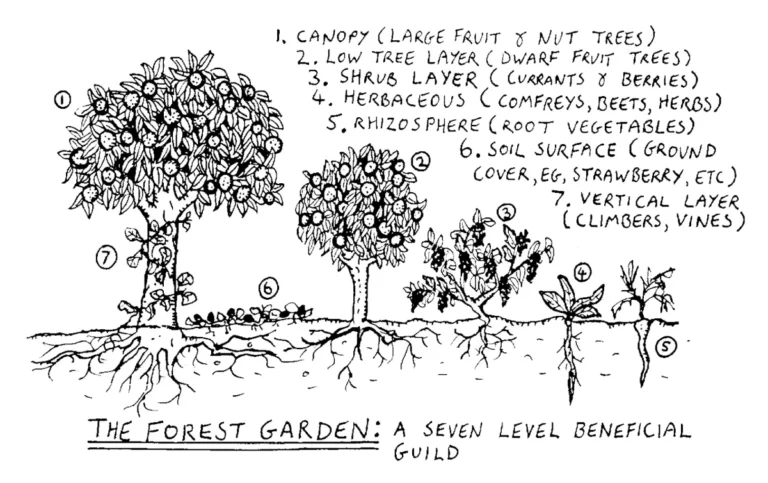
Guide to Nitrogen Fixing Shrubs Food Forest Understory 2026
If you're planting a food forest, you already know the understory is where the magic happens, but it’s also where things can go sideways fast. Nitrogen fixing shrubs food forest understory layers do more than just look good; they quietly build soil fertility, feed pollinators, and keep your system resilient without synthetic inputs. The catch? Not every shrub works in every spot, and picking the wrong one can create more problems than it solves.
In our research, well-chosen nitrogen-fixing shrubs can add 20, 200 lbs of nitrogen per acre annually to the soil through symbiotic bacteria. That’s real fertility, not guesswork. But success starts with matching the right plant to your light, soil, and space, so let’s walk through exactly how to do that.
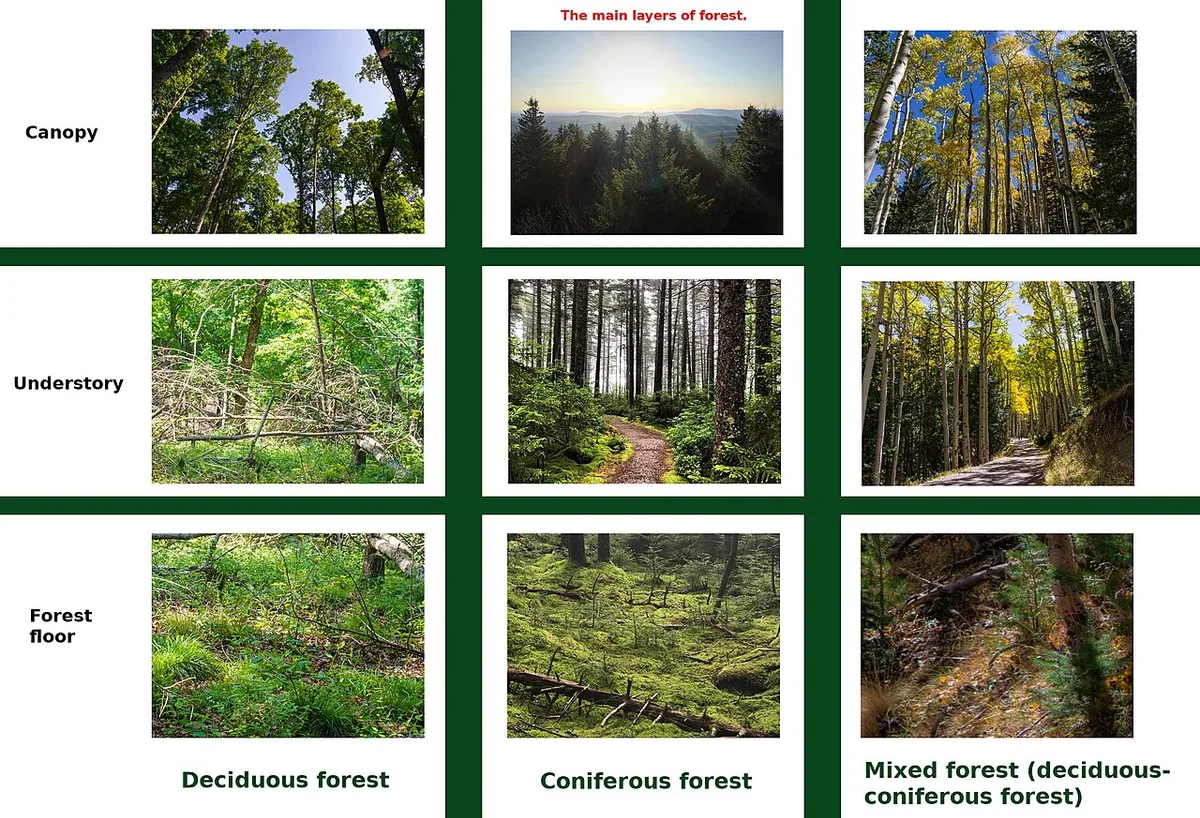
Image source: Wikimedia Commons / Forest vegetation (CC BY)
Why Your Food Forest Needs Nitrogen-Fixing Shrubs in the Understory
Most food forests struggle with one silent thief: nitrogen depletion. Fruit trees, nut crops, and berry bushes are heavy feeders, and without a steady supply, growth stalls and yields drop. Nitrogen-fixing shrubs solve this by hosting specialized bacteria, either rhizobia (in legumes) or actinobacteria (in actinorhizal plants), that pull atmospheric nitrogen from the air and convert it into plant-usable forms right in the soil.
These shrubs don’t just feed themselves, they share. Their leaf litter, root exudates, and eventual pruning debris release nitrogen slowly, feeding neighboring plants. Plus, they add structure: flowers for pollinators, berries for birds, and dense roots that prevent erosion. In a layered system, they’re the quiet workhorses that keep everything else thriving.
The Core Problem: Poor Soil Fertility Without Chemical Inputs
Left unchecked, continuous harvesting pulls more nitrogen out of the soil than rainfall or organic matter can replace. Many gardeners compensate with compost or manure, but those require labor, space, and often external sourcing. Synthetic fertilizers offer a quick fix but degrade soil biology over time and contradict permaculture ethics.
The real issue isn’t just low nitrogen, it’s disrupted nutrient cycling. Without living roots feeding microbes year-round, the soil food web collapses. Nitrogen-fixing shrubs close this loop by maintaining active root systems even in winter (if evergreen) and supporting microbial partnerships that process organic matter efficiently. They turn a passive plot into a self-renewing ecosystem.
How Nitrogen-Fixing Shrubs Actually Work (And Why They’re Not Magic)
These shrubs don’t “make” nitrogen out of nothing, they partner with soil microbes to convert atmospheric N₂ into ammonia, a form plants can absorb. Leguminous shrubs like Caragana use rhizobia bacteria housed in root nodules; actinorhizal species like Elaeagnus team up with Frankia bacteria. Both processes require specific conditions: proper pH, adequate phosphorus, and compatible microbial strains already present, or added via inoculant.
It’s not instant. Full nodulation can take 2, 5 years, and fixation rates vary wildly based on species, climate, and soil health. A stressed shrub in compacted clay won’t fix much nitrogen, no matter how hard it tries. Think of them as long-term investments, not quick fixes.
Key Traits to Match Shrubs to Your Understory Conditions
Picking the right shrub starts with honest site assessment. Ask three questions: How much light does the understory get? What’s your soil like? And how much room do you actually have?
Light & Shade Tolerance
Understory zones range from dappled sun under young canopy trees to deep shade near mature oaks or maples. Most nitrogen fixers need at least 4, 6 hours of direct sun daily, but a few tolerate heavier shade.
- Full sun to partial shade (4, 6+ hours): Elaeagnus angustifolia, Caragana arborescens, Cytisus scoparius
- Moderate shade (2, 4 hours): Elaeagnus commutata, Shepherdia canadensis
- Deep shade (avoid unless proven): Most legumes struggle; consider groundcovers like clover instead
Soil & Moisture Needs
Clay, sand, or loam? Wet feet or drought-prone? Nitrogen fixers vary widely:
| Species | Soil Preference | Drought Tolerance | pH Range |
|---|---|---|---|
| Caragana arborescens | Sandy to loam | High | 6.0–8.0 |
| Elaeagnus umbellata | Adaptable | Moderate | 5.5–7.5 |
| Shepherdia canadensis | Moist, well-drained | Low | 5.0–7.0 |
Avoid planting moisture-loving species like Shepherdia in arid zones unless irrigated. Conversely, don’t put drought-tolerant types in perpetually soggy soils, they’ll rot.
Growth Habit & Mature Size
Crowding kills understory function. A shrub that tops out at 3 ft won’t compete with your apple tree; one that hits 15 ft might steal all the light.
- Compact (3, 6 ft): Elaeagnus pungens ‘Maculata’, dwarf Caragana cultivars
- Medium (6, 10 ft): Elaeagnus commutata, Caragana arborescens
- Large (10, 15+ ft): Elaeagnus angustifolia, Robinia pseudoacacia (black locust, use cautiously)
Always check mature spread, not just height. Some shrubs sucker aggressively, forming thickets that choke out other understory plants.
Top Nitrogen-Fixing Shrubs for Food Forest Understories (With Real Trade-Offs)
Not all nitrogen fixers are created equal. Some offer food, others just fertility, and a few come with serious caveats.
Caragana arborescens (Siberian pea shrub)
Fast-growing, hardy to Zone 2, and produces edible pods (young ones only). Fixes nitrogen reliably and tolerates poor soils. But it suckers readily, can become weedy if not managed. Best for large plots where spread isn’t an issue.
Elaeagnus species (silverberry, autumn olive)
Highly adaptable, drought-tolerant, and yields antioxidant-rich berries. E. umbellata is especially productive. However, E. angustifolia (Russian olive) is invasive in many regions, check local lists before planting. All Elaeagnus benefit from pruning to encourage fruiting and reduce shading.
Shepherdia canadensis (russet buffaloberry)
Native to North America, supports wildlife, and tolerates cold. Female plants produce tart berries. Requires a male pollinator and moist soils, not ideal for dry sites. Less aggressive than Elaeagnus, making it safer for small gardens.
Cytisus scoparius (Scotch broom)
Fixes nitrogen and blooms profusely, but highly invasive across the Pacific Northwest and parts of the Midwest. Avoid unless you’re in a controlled research setting. Its seeds persist in soil for decades.
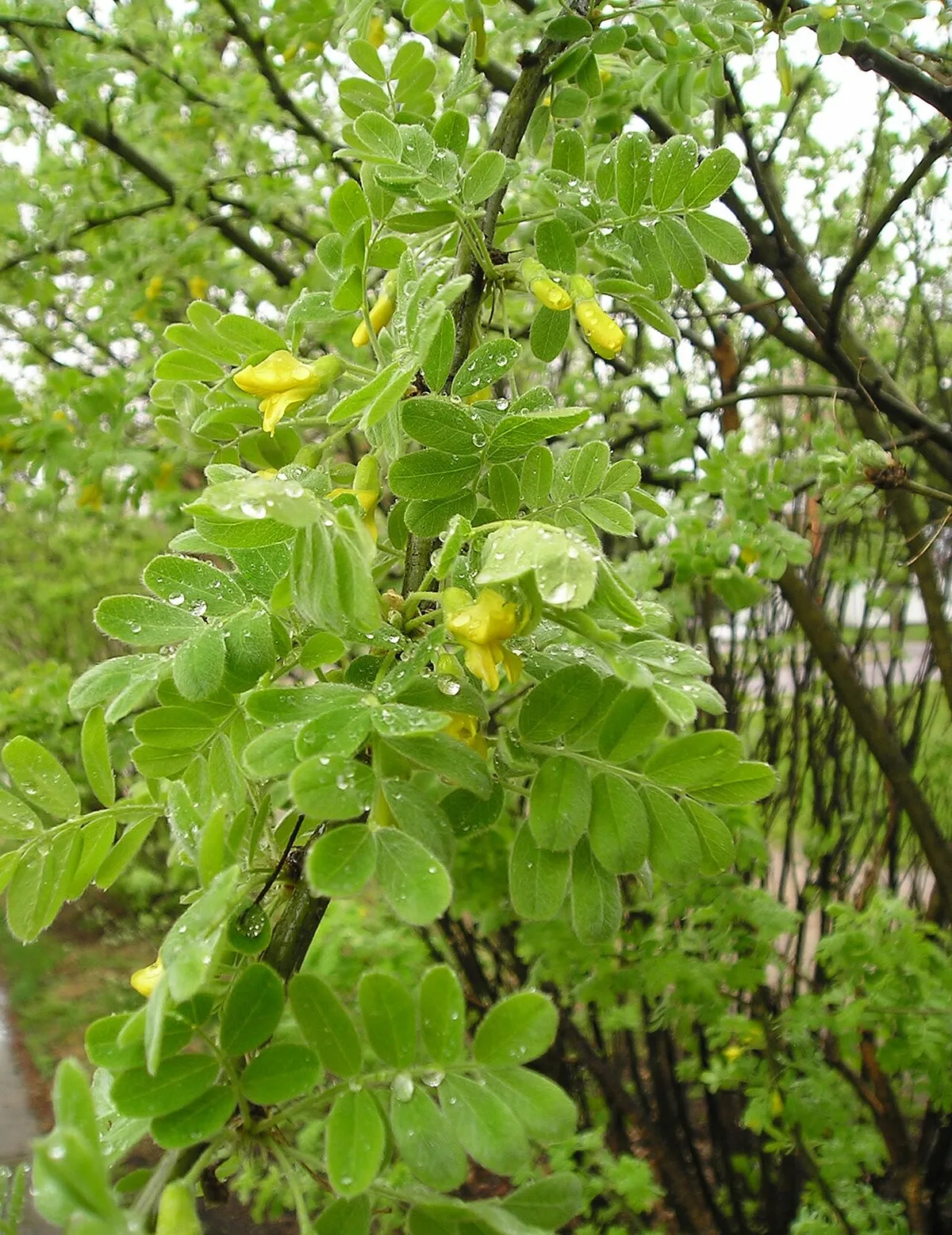
Image source: Wikimedia Commons / Blaine Hansel (CC BY)
Choose based on your priorities: food yield, low maintenance, or native ecology. And always verify local regulations, what works in Minnesota may be banned in Oregon.
When to Avoid Certain Species (Invasive Risks & Aggressive Spreaders)
Some nitrogen-fixing shrubs come with hidden costs. Elaeagnus angustifolia (Russian olive) grows fast and fixes nitrogen well, but it’s escaped cultivation across the western U.S., outcompeting native willows and cottonwoods along riverbanks. Similarly, Cytisus scoparius (Scotch broom) dominates roadsides in Washington and Oregon, its seeds surviving decades in soil.
Check your state’s noxious weed list before planting. In Minnesota, Caragana is safe; in California, it’s restricted. If you’re near waterways or natural areas, lean toward native species like Shepherdia canadensis or Amorpha fruticosa (false indigo). Aggressive spreaders might work in isolated, managed plots, but never where seeds can hitch a ride on wind, water, or wildlife.
Step-by-Step: Choosing the Right Shrub for Your Site
Start with observation, not impulse. Walk your understory at different times of day. Note how light moves, where water pools, and which spots stay dry. Then match those conditions to shrub traits.
Assess Your Conditions First
Measure light with a simple sun calculator app or just track shadows for a week. Test soil texture by squeezing a handful, if it forms a tight ball, it’s clay; if it crumbles, it’s sandy. Check drainage by digging a 12-inch hole and filling it with water, if it drains in under an hour, you’re good for most species.
Check Local Regulations & Invasive Lists
Visit your state agriculture department’s website or extension office. Many publish searchable databases of prohibited plants. For example, Elaeagnus umbellata is banned in parts of New Zealand and under review in several U.S. states due to bird-dispersed seeds.
Match Species to Your Goals (Food, Fertility, or Habitat)
- Prioritize food? Choose berry-producers like Elaeagnus umbellata or Shepherdia canadensis.
- Need erosion control? Go for deep-rooted Caragana or Robinia pseudoacacia (but manage suckering).
- Supporting pollinators? Select flowering species like Amorpha fruticosa or Ceanothus americanus (New Jersey tea).
Always plant males and females together if fruit is desired, many dioecious species won’t set fruit alone.
Common Mistakes That Sabotage Understory Success
Overplanting is the top error. It’s tempting to cram in as many fixers as possible, but dense shrubs block light, compete for water, and create humid microclimates that invite fungal diseases. Stick to 1 shrub per 25, 50 sq ft in most temperate zones.
Another trap: skipping inoculants. If your soil lacks the right rhizobia or Frankia strains, nodules won’t form, even if the shrub looks healthy. Buy species-specific inoculant powder when planting legumes or actinorhizal shrubs in new or disturbed soils.
Finally, don’t ignore mature size. A 3-foot Caragana sapling can become a 10-foot thicket in five years. Prune annually to maintain openness and airflow.
Maintenance That Keeps Them Working for You (Not Against You)
Pruning isn’t optional, it’s essential. Remove lower branches to raise the canopy, letting light reach understory herbs and berries. Cut back suckers on species like Caragana or Robinia to prevent spread. Do this in late winter before bud break.
Mulch with wood chips or leaf litter to retain moisture and feed soil microbes, but keep it 3, 4 inches away from stems to avoid rot. In dry summers, water deeply once a week, shrubs with shallow roots (like Shepherdia) suffer in drought.
Monitor for pests. Elaeagnus attracts psyllids that cause leaf curling; blast them off with water or use insecticidal soap if severe. Healthy, well-spaced plants usually outgrow minor infestations.